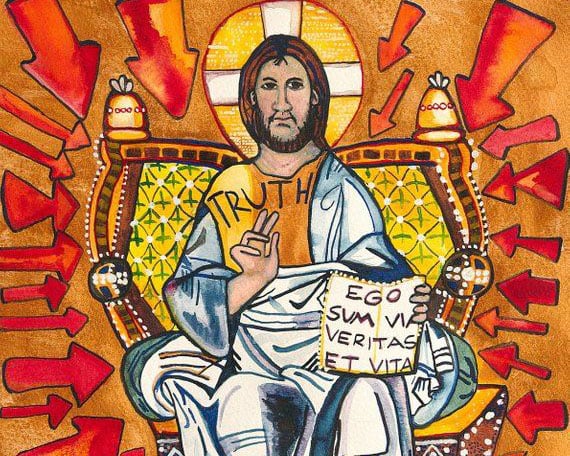
FIFTH SUNDAY OF EASTER
John 14:1–14 opens in a moment of deep tension. Jesus is speaking to His disciples just before His crucifixion. They are confused, afraid, and uncertain about what’s coming next. And into that fear, Jesus speaks these words:
“Do not let your hearts be troubled.”
That’s not a suggestion – it’s an invitation to trust. Jesus doesn’t deny that trouble exists. He doesn’t say, “There’s nothing to worry about.” Instead, He says, “Trust in God; trust also in me.”
Trouble is real. Anxiety is real. Loss, uncertainty, and fear are part of life. But Jesus redirects the disciples’ focus – not to their circumstances, but to Himself. Faith doesn’t remove trouble; it relocates our confidence.
So the question is not: Will we face trouble?
The question is: Where will we place our trust when we do?
Jesus continues: “My Father’s house has many rooms… I go to prepare a place for you.” This is one of the most comforting promises in Scripture. Jesus is not abandoning His disciples – He is going ahead of them. Their future is not uncertain. It is prepared. And notice this: the focus is not just on where they are going, but who they will be with.
“I will come back and take you to be with me.”
Heaven is not primarily about streets of gold or gates of pearl – it is about being with Christ. Whatever we face now, there is a secure future held by a faithful Saviour.
Then Thomas speaks up: “Lord, we don’t know where you are going, so how can we know the way?”
Jesus responds with one of the most profound statements in all Scripture:
“I am the way and the truth and the life. No one comes to the Father except through me.” Notice Jesus doesn’t say, “I will show you the way.” He says, “I am the way.”
He is the way – the path to God is not a system, but a person.
He is the truth – not just teaching truth, but embodying it.
He is the life – the source of eternal and abundant life.
In a world full of options, opinions, and competing truths, Jesus makes an exclusive and bold claim. This can feel uncomfortable in a culture that prefers “many paths.” But Jesus is not limiting access – He is providing it.
Without Him, we are lost. With Him, we are brought home.
Philip then asks, “Lord, show us the Father, and that will be enough for us.” Jesus responds: “Anyone who has seen me has seen the Father.”
This is a staggering claim. Jesus is not just a messenger of God – He is the visible image of the invisible God. If you want to know what God is like, look at Jesus:
– His compassion for the broken
– His mercy toward sinners
– His power over darkness
– His sacrifice on the cross
God is not distant or unknowable – He has made Himself known in Christ.
Finally, Jesus says something surprising:
“Whoever believes in me will do the works I have been doing, and they will do even greater things than these.”
What does He mean by “greater”? Not necessarily more spectacular – but more widespread. Jesus’ earthly ministry was limited geographically. But through His followers – empowered by His Spirit – the message of salvation would go to the ends of the earth.
And then comes the promise about prayer:
“I will do whatever you ask in my name.”
This isn’t a blank check for personal wishes. To pray “in Jesus’ name” is to pray in alignment with His character, His will, and His mission. It means we are invited to participate in what God is already doing.
So what does this passage mean for us today?
When your heart is troubled – trust in Jesus.
When the future feels uncertain – remember He has prepared a place.
When you feel lost – He is the way.
When you wonder what God is like – look at Christ.
When you feel small or ineffective – know that God works through those who believe.
Jesus spoke these words to anxious, confused followers. And He speaks them to us today.
“Do not let your hearts be troubled.” Not because life is easy – but because He is faithful.
In the name of the Father, and of the Son, and of the Holy Spirit.
Amen.
Cover image artist – Andrea Krooks


