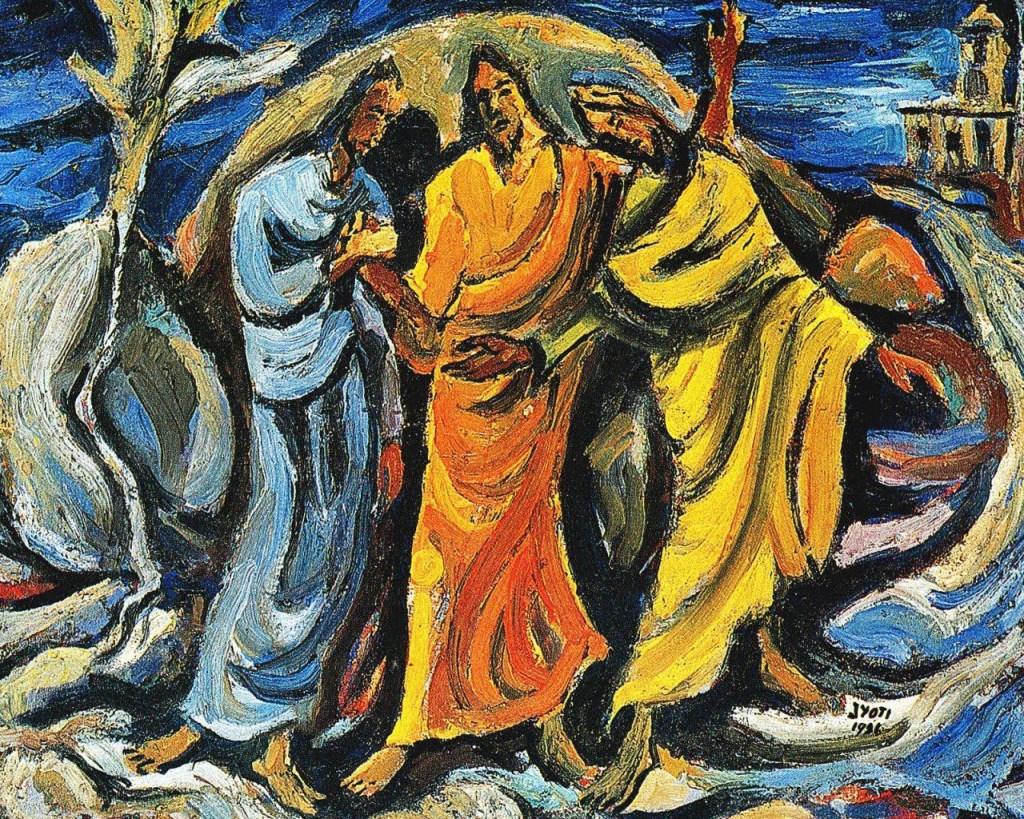
THIRD SUNDAY OF EASTER
In Luke 24:13–35, we meet two disciples walking away from Jerusalem on the very day of the resurrection. They are heading to a village called Emmaus, about seven miles away. It’s not just a physical journey—it’s an emotional and spiritual one too.
They are leaving behind the place where their hopes seemed to die. They had believed Jesus was the one to redeem Israel. But now, in their minds, that hope is gone. The cross has shattered their expectations. Even though they’ve heard reports that the tomb is empty, they don’t yet understand what it means. So they walk. And as they walk, they talk—trying to make sense of everything that has happened.
And then, quietly, without announcement, Jesus comes near and walks with them. But they don’t recognise Him. This is one of the most striking details in the story: Jesus is right there, and they don’t know it. He asks them what they’re discussing, and they respond with a mix of sadness and surprise—“Are you the only one who doesn’t know what has happened?”
Isn’t that ironic? They are explaining the story of Jesus… to Jesus. But before we smile too quickly, we should recognise how often this happens in our own lives.
We walk through grief, disappointment, confusion—and we assume God is distant, absent, or silent. Meanwhile, He is closer than we realise, walking beside us in ways we don’t yet perceive.
Sometimes our expectations blind us. These disciples expected a political redeemer, a visible victory, immediate change. When Jesus didn’t fit that expectation, they couldn’t see Him—even when He was right in front of them.
Jesus responds not by immediately revealing Himself, but by teaching them. Beginning with Moses and all the Prophets, He explains what was said in all the Scriptures concerning Himself.
In other words, He reframes their understanding. Their problem wasn’t just that they were sad—it was that they misunderstood the story. They saw the cross as the end, but in God’s plan, it was the very centre.
How often do we interpret our lives the same way? We see setbacks, losses, delays—and we assume something has gone wrong. But God may be weaving those very moments into a larger redemption we don’t yet see.
Jesus doesn’t just fix their emotions—He reshapes their vision.
And something begins to happen inside them.
Later they will say, “Were not our hearts burning within us while He talked with us on the road and opened the Scriptures to us?” There’s a stirring, a warming, a quiet awakening. Truth has a way of doing that when it reaches the heart.
When they reach Emmaus, Jesus acts as if He will go further. But they urge Him strongly, “Stay with us.” And He does.
At the table, He takes bread, gives thanks, breaks it, and gives it to them. And suddenly—their eyes are opened. They recognise Him. And then, just as suddenly, He disappears from their sight.
Why this moment? Why the breaking of bread? Because recognition often comes not just through information, but through relationship. Not just hearing about Jesus—but encountering Him. The same hands that were broken on the cross now break bread at the table. And in that familiar act, they finally see.
What do they do next? They get up at once and return to Jerusalem. Seven miles back—at night. The same road they walked in sadness, they now travel in urgency and joy.
Everything has changed. They came to Emmaus ready to settle into disappointment. Now they are running back with hope. This is what encountering the risen Christ does—it turns us around. It redirects our path. It moves us from retreat to mission.
This story speaks powerfully into our lives today. There are times when we feel like we’re walking away from hope. Times when God seems hidden, when prayers feel unanswered, when the story doesn’t make sense.
But this passage reminds us: Jesus is closer than we think. Even when unrecognised, He is present. Even when we don’t understand, He is at work.
And often, it’s in looking back—through Scripture, through reflection, through shared experiences—that we begin to see where He was all along.
So here’s the invitation: Keep walking—but don’t walk alone. Stay open—even when you don’t understand. Invite Him in—“Stay with us.”
Because the risen Christ still meets people on ordinary roads. He still opens minds and warms hearts. He still reveals Himself in ways we don’t expect. And when He does, everything changes.
You may discover that in your confusion, your disappointment, even your doubt…He was with you all along.
In the name of the Father, and of the Son, and of the Holy Spirit. Amen.
Cover image artist – Jyoti Sahi


