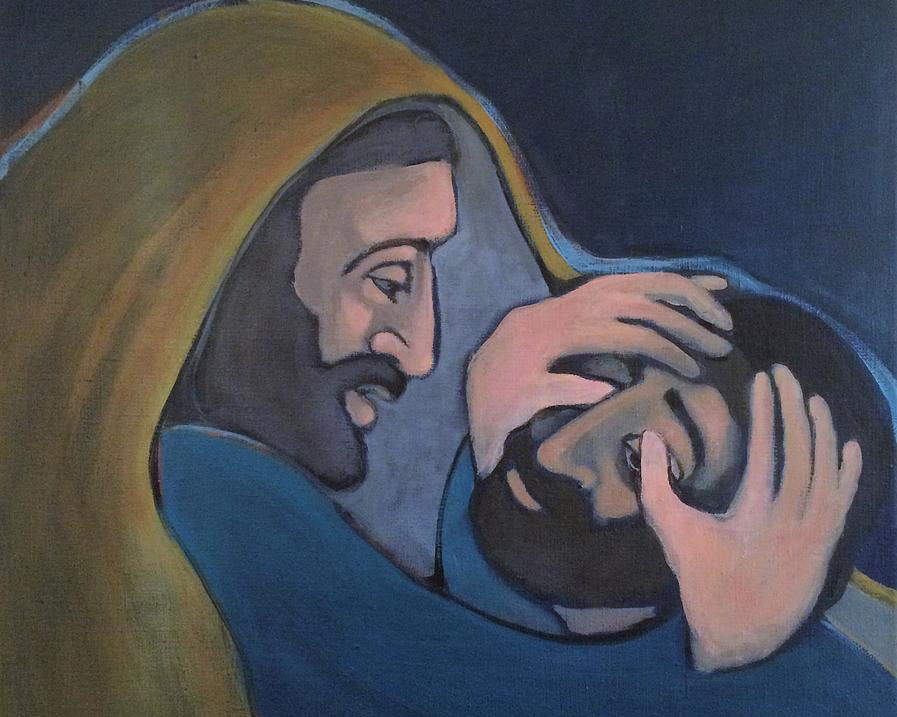
LENT 4, YEAR A
John 9:1-41
One of the deepest human questions is “Why?”
When something painful happens—illness, disability, tragedy—we instinctively ask: Why did this happen? Who is responsible? That is exactly the question raised at the beginning of today’s Gospel reading.
When Jesus and His disciples encounter a man blind from birth, the disciples ask: “Rabbi, who sinned, this man or his parents, that he was born blind?” They assume suffering must have a direct cause in personal sin. But Jesus responds in a surprising way. And in doing so, He teaches us three powerful truths about suffering, faith, and spiritual sight.
Jesus sees purpose where we see problems. Jesus answers: “Neither this man nor his parents sinned… but this happened so that the works of God might be displayed in him.” Jesus is not saying suffering is good. But He is saying God can reveal His glory through broken situations.
The disciples saw a theological puzzle. A problem to debate. But Jesus saw a person, and an opportunity for God’s work. Many times, we do the same thing. We analyse suffering instead of showing compassion.
Jesus doesn’t start with an explanation. He starts with action. He kneels down, makes mud with saliva, places it on the man’s eyes, and tells him to wash in the pool of Siloam. And the man comes back seeing. This miracle shows that Jesus is not only a teacher. He is the light of the world.
Encountering Jesus leads to growing faith. The healed man goes through an incredible journey of faith throughout this chapter. Notice how his understanding of Jesus grows… At first, he simply says “The man called Jesus made mud…” Jesus is just a man to him. When questioned again, he says “He is a prophet.” His understanding is deepening. When the religious leaders challenge him, he boldly declares “If this man were not from God, he could do nothing.” Now he recognises Jesus is sent by God. And finally, when Jesus finds him again and reveals Himself as the Son of Man, the man says “Lord, I believe,” and he worshiped Him.
Faith often grows step by step, just like that. Many people start with curiosity about Jesus, then respect Him, then realise He is from God, and finally come to worship Him as Lord. Spiritual sight often comes gradually.
The narrative goes on to illustrate that the greatest blindness is spiritual. Ironically, the only people in the story who remain blind are the religious leaders. The Pharisees investigate the miracle repeatedly. They question the man. They question his parents. They argue with each other. Yet despite overwhelming evidence, they refuse to believe. Why? Because accepting the miracle would mean accepting Jesus.
At the end of the chapter Jesus says something powerful: “For judgment I have come into this world, so that the blind will see and those who see will become blind.” This is a great reversal: The physically blind man comes to spiritual sight. The religious experts, who think they see clearly, remain spiritually blind. Spiritual blindness is not about lack of information. It is about refusing the light.
So, what does this mean for us today?
This story invites us to ask (at least) three questions…
How do we respond to suffering? Do we only ask “Why?”, or do we ask “How might God work through this?” God often reveals His power in the places where life feels broken.
Are we growing in our understanding of Jesus? Faith is not static. Like the blind man, we should be moving toward a deeper confession: From curiosity → to belief → to
worship.
And are we open to the light of Christ? The Pharisees prove that it is possible to know Scripture, practice religion, and still miss Jesus. True sight is not just knowledge. It is humble openness to Christ.
This chapter ends with a striking contrast. One man begins the day blind and begging. By the end he is seeing and worshiping Jesus. The religious leaders begin confident and respected. But they end exposed in their spiritual blindness.
The question the passage leaves us with is simple: Do we truly see Jesus for who He is?
When our eyes are opened, life begins to change. We gain clarity about Jesus, recognising Him as Lord rather than just a distant figure. At the same time, we grow in humility about ourselves, aware of our need for His grace. This new sight also gives us
compassion for people, seeing others as Jesus does—with love and concern. And finally, it produces courage to testify, a willingness to share what Christ has done in our lives, just as the man in today’s Gospel reading simply declared, “I was blind, but now I see.”
In the name of the Father, and of the Son, and of the Holy Spirit. Amen.
Cover image artist – Ann Lukesh

 Rev Beck Newell