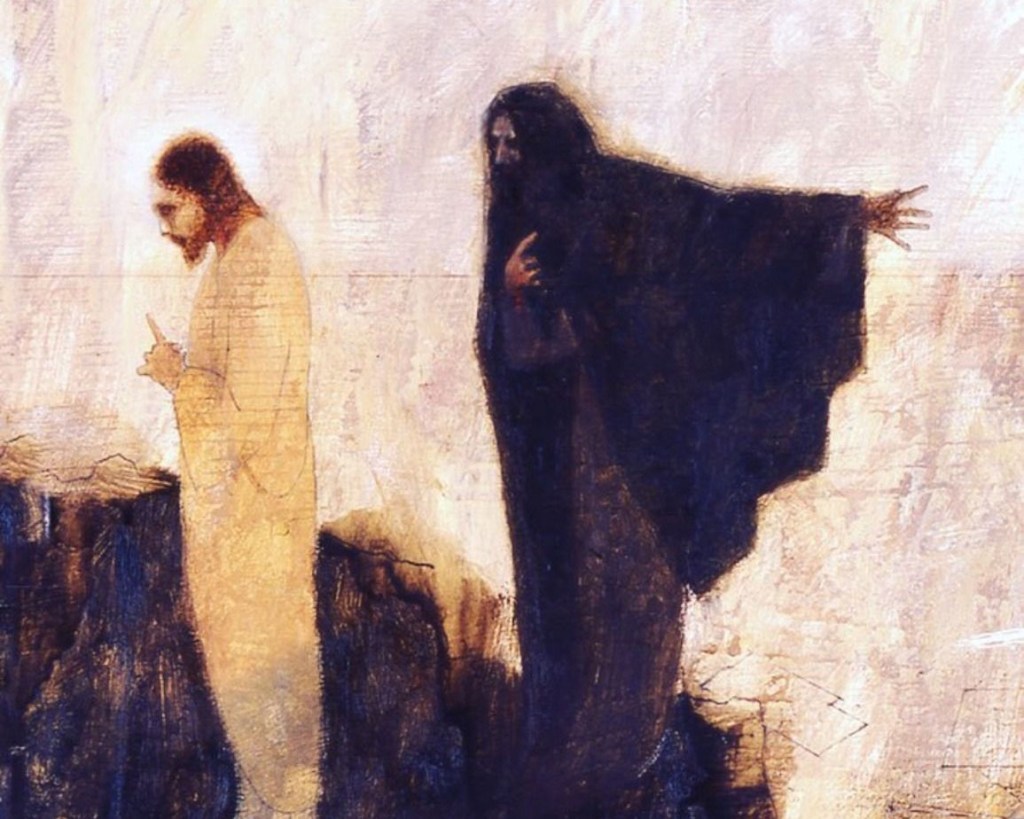
LENT 1, YEAR A
Matthew 4:1-11
On this First Sunday in Lent, we follow Jesus into the wilderness.
Right after His baptism—right after the heavens open and the voice declares, “This is my beloved Son”—Jesus is led by the Spirit into the wilderness. Not away from God, but by God. Not as punishment, but as preparation.
The wilderness is not an accident. It is part of the journey. Lent is our wilderness season. Forty days echoing Jesus’ forty days. A time when we step away from distraction and comfort to confront what is really inside us—and what we truly depend on.
In the Gospel of Matthew 4:1–11, Jesus faces three temptations. They are ancient. They are personal. And they are still very much alive.
Firstly, the temptation of appetite. After forty days of fasting, Jesus is hungry. The tempter comes with something that sounds reasonable: “If you are the Son of God,
command these stones to become bread.”
What’s wrong with bread, we might ask? Nothing. The temptation is not about food. It is about using power to serve self. It is about satisfying legitimate hunger in illegitimate ways. It is about putting physical need above spiritual trust.
Jesus responds with Scripture: “Man shall not live by bread alone, but by every word that comes from the mouth of God.” Hunger is real. Needs are real. But they are not ultimate.
Lent asks us: What is feeding you? What do you reach for first—comfort, control, distraction? Or the Word of God? We are tempted daily to turn stones into bread—to solve every discomfort immediately, to numb every ache. Jesus shows us another way: trust the Father, even in hunger.
Then comes the temptation of spectacle. Next, the devil takes Jesus to the pinnacle of the temple in Jerusalem. “If you are the Son of God, throw yourself down.” Notice the strategy: the tempter now quotes Scripture. Showing us that even holy words can be twisted.
This temptation is about forcing God’s hand. It is about demanding proof. It is about performing faith instead of living it. “Make God catch you,” the tempter says. “Make it dramatic. Make it undeniable.”
But Jesus answers: “You shall not put the Lord your God to the test.” Faith is not about staging miracles. It is about obedience in ordinary places.
We may not stand on temple roofs, but we test God in quieter ways: “If You really love me, fix this now.” “If You are real, prove it.” “If I do this, You owe me that.” Lent invites us to trust without spectacle. To pray without bargaining. To believe without manipulating.
Finally, comes the temptation of power. The devil shows Jesus all the kingdoms of the world and their glory. “All these I will give you, if you will fall down and worship me.”
Here is the deepest temptation: a shortcut to glory without the cross. Jesus came to reign—but through suffering love. The tempter offers another path: authority without sacrifice, influence without obedience, a crown without a cross.
How often are we tempted by the same bargain? Compromising your integrity for success. Bending the truth for advancement. Worshiping power, security, or recognition—and calling it wisdom. Jesus’ response is decisive: “Worship the Lord your God, and serve Him only.” No divided loyalties. No shared altars.
Lent exposes our idols. What kingdoms have we been quietly bowing to? Achievement? Politics? Wealth? Reputation? The wilderness strips away illusions. It clarifies whom we worship.
There is something even deeper happening in this passage: Jesus relives Israel’s story.
Israel passed through the waters of the Red Sea. Jesus passes through the waters of baptism.
Israel wandered forty years in the wilderness and failed in testing. Jesus spends forty days in the wilderness and remains faithful.
Where Israel grumbled about bread, Jesus trusts.
Where Israel tested God, Jesus obeys.
Where Israel worshiped a golden calf, Jesus worships God alone.
Jesus is the faithful Son Israel could not be—and the faithful Son we have not been.
This is not just a story about how to resist temptation. It is the story of a Saviour who stands where we fall and wins where we lose. That is why Lent is not about proving our strength. It is about clinging to His.
The story ends quietly: “Then the devil left him, and behold, angels came and were ministering to him.” The wilderness does not last forever. Temptation is real—but it is not final. The devil departs. God sends help.
Some of you may be in a wilderness right now: A season of uncertainty. A battle with temptation. A time of spiritual dryness. Take heart. The Spirit led Jesus into the wilderness—but the Father did not abandon Him there. And He will not abandon you.
So what is Lent for? It is not spiritual self-improvement. It is not earning God’s approval. It is not proving how disciplined we can be.
Lent is training in trust.
When we fast, we remember we do not live by bread alone. When we pray, we refuse to test God and instead surrender to Him. When we give, we loosen our grip on the kingdoms of this world.
Lent teaches us to say with Jesus: My hunger does not rule me. My pride does not define me. Power does not own me. God alone is worthy of worship.
As we begin this forty-day journey, we do not walk into the wilderness alone. The One who overcame temptation walks with us. The One who refused the shortcut will carry the cross. And the One who was ministered to by angels will one day reign in glory.
This First Sunday in Lent, hear the invitation: Step into the wilderness with Jesus. Face what tempts you, lay down what enslaves you, and worship the Lord your God—only Him. In the name of the Father, and of the Son, and of the Holy Spirit. Amen.
Cover Image artist – J. Kirk Richards

 Rev Beck Newell