EPIPHANY 5, YEAR A
Matthew 5:13-20
My mother loved salt. Not an unhealthy amount. Just enough to add some extra flavour to her meal. If we ate out, she would always ask for the saltshaker. And she had a collection of those little salt sachets in her handbag.
It’s her birthday today. Our first without her. But if she had still been with us, we would have had a meal out or made special food at home tonight. She would have asked for the salt, and we would have talked about today’s gospel reading.
Something I have always loved about the first portion of today’s passage, is that we can read it some two thousand years later and still understand the significance of the salt and the light. Many of the parables and things Jesus said we have to wrestle with a little bit to understand, because they are from a very different time and a very different place. But salt and light, we can understand more easily.
We pick things up in Matthew chapter five, where Jesus has just finished the Beatitudes. He has described the inner life of the kingdom: poverty of spirit, meekness, hunger for righteousness, mercy, purity of heart. And then, He turns to His disciples and says: “You are the salt of the earth… You are the light of the world.”
Notice what Jesus does not say here. He does not say, “Try to become salt.” He does not say, “Work hard enough and maybe you’ll become light.” He says, “You are.” This passage is not first about what we do. It’s about who we are—and more specifically, what is happening in our hearts.
In verse thirteen, Jesus says “You are the salt of the earth. But if salt loses its saltiness, how can it be made salty again?” Salt in the ancient world did three main things: it preserved, flavoured, and created thirst. All of that comes from its nature. Salt doesn’t try to be salty. It is salty. Jesus is warning us that it is possible to look religious on the outside while losing spiritual distinctiveness on the inside. Salt loses its effectiveness when it becomes diluted—mixed with too much of everything else.
That is a heart issue.
A salty heart is undivided in its devotion, willing to be distinct, and rooted in love for God more than approval from people. A heart that loses its saltiness says: “I want Jesus, but I also want to blend in.” “I want faith, as long as it doesn’t cost me comfort.” And “I want holiness, but not if it makes me awkward.” Jesus isn’t talking about behaviour modification here. He’s talking about compromised affection. The question isn’t: “Do I still believe the right things?” The question is: “What do I love most?”
In verses fourteen to sixteen, Jesus talks about the light. “You are the light of the world… a city on a hill cannot be hidden.” Light reveals what is already there. It doesn’t draw attention to itself; it makes everything else visible. Jesus says we don’t hide light—not because we’re trying to be impressive, but because hiding it contradicts its purpose.
Here’s where heart attitude really matters. We can be tempted to hide our light for many different heart reasons. We might hide out of fear of being rejected. We might hide due to pride and not wanting to be associated with other Christians. We may hide due to false humility, not wanting to appear “too spiritual.”
But Jesus says the goal of light is not self-promotion: “That they may see your good deeds and glorify your Father in heaven.” A healthy heart doesn’t ask: “How do I look?” Or “Will this make me stand out?” A healthy heart asks: “Will this help someone see God more clearly?” The light we shine is not our perfection—it’s our transformed heart. A heart shaped by grace naturally points away from itself.
In verse seventeen to nineteen Jesus shifts the focus to righteousness—but not the shallow kind. The religious leaders of the day had mastered external obedience, but their hearts were far from God. They loved rules more than righteousness, and appearances more than obedience. Jesus is saying: “The law was always meant to reach the heart—and I’ve come to fulfill that.”
This exposes an important heart attitude. And something we can all ask ourselves. Do I obey God to earn approval, or because I trust His goodness? Do I see His commands as burdens, or as life-giving? A transformed heart says: “I want what God wants.” “I trust that His way leads to life.” And “Obedience isn’t about checking boxes—it’s about alignment.” Jesus isn’t lowering the standard. He’s deepening it—from actions to intentions, from behaviour to desire.
Then the passage ends with a verse that can be challenging for us to unpack. In verse twenty, Jesus says “Unless your righteousness surpasses that of the Pharisees and the teachers of the law, you will certainly not enter the kingdom of heaven.”
This statement would have shocked His listeners. And, read a certain way, can still shock us today. The Pharisees were the gold standard of religious behaviour. If they weren’t righteous enough, who was? But that’s exactly the point. Jesus is not calling for more effort. He’s calling for a different kind of heart. The Pharisees had clean hands, public prayers, and perfect rule-keeping. But they lacked humility, mercy, and dependence on God.
Kingdom righteousness begins with this heart confession: “I cannot make myself righteous. I need grace.” This is the righteousness that surpasses: Not pride, but repentance. Not performance, but trust. Not comparison, but surrender. In this
passage, Jesus isn’t primarily asking us to do more. He’s inviting us to be transformed from the inside out.
A kingdom heart is: salty without being harsh, visible without being self-centered, obedient without being legalistic, and humble enough to depend fully on grace.
So, the real question today is not: “Am I religious enough?” Or “Do I look like a Christian?” The real question is: “What is the posture of my heart toward God?” When the heart is right: salt retains its flavour, light shines naturally, obedience flows freely, and God receives the glory.
May God shape our hearts so deeply that the world doesn’t just see what we believe—but sees Who we belong to. In the name of the Father, and of the Son, and of the Holy Spirit. Amen.
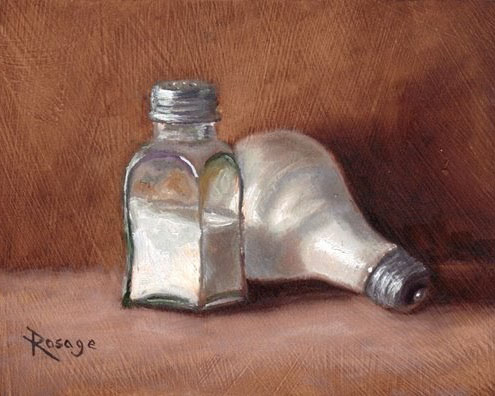
Cover image artist – Bernie Rosage Jr.

 Rev Beck Newell