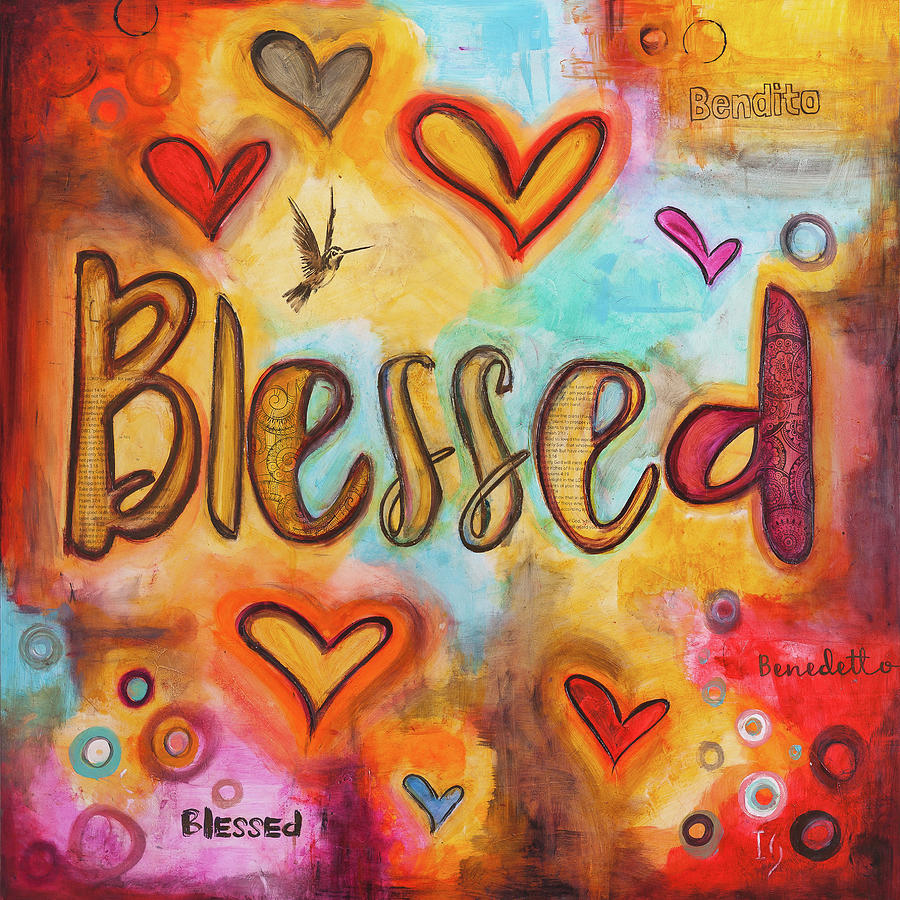
EPHIPHANY 4, YEAR A
Matthew 5:1-12 (The Message)
You’re Blessed
When Jesus saw his ministry drawing huge crowds, he climbed a hillside. Those who were apprenticed to him, the committed, climbed with him. Arriving at a quiet place, he sat down and taught his climbing companions. This is what he said:
“You’re blessed when you’re at the end of your rope.
With less of you there is more of God and his rule.
“You’re blessed when you feel you’ve lost what is most dear to you.
Only then can you be embraced by the One most dear to you.
“You’re blessed when you’re content with just who you are—no more, no less. That’s the moment you find yourselves proud owners of everything that can’t be bought.
“You’re blessed when you’ve worked up a good appetite for God.
He’s food and drink in the best meal you’ll ever eat.
“You’re blessed when you care.
At the moment of being ‘care-full,’ you find yourselves cared for.
“You’re blessed when you get your inside world—your mind and heart—put right. Then you can see God in the outside world.
“You’re blessed when you can show people how to cooperate instead of compete or fight. That’s when you discover who you really are, and your place in God’s family.
“You’re blessed when your commitment to God provokes persecution.
The persecution drives you even deeper into God’s kingdom.
“Not only that—count yourselves blessed every time people put you down or throw you out or speak lies about you to discredit me. What it means is that the truth is too close for comfort and they are uncomfortable. You can be glad when that happens—give a cheer, even!—for though they don’t like it, I do! And all heaven applauds. And know that you are in good company. My prophets and witnesses have always gotten into this kind of trouble.
You have just heard the translation from The Message Bible of the Beatitudes from the Gospel of Matthew. During our Wednesday Bible Study at St Margaret’s, we look at the Gospel reading for the coming Sunday. Each of us brings our Bibles, which means that there are a variety of translations shared during the study. On Wednesday, Fr Brenton read this translation, and I heard the
Beatitudes in a different light than I ever had before. I wonder if, when you just heard it then, it had the same impact for you.
Most of us know the Beatitudes so well that they almost slide past us. “Blessed are the poor in spirit…Blessed are those who mourn…” They sound holy. They sound beautiful. And if we’re honest, they can also sound abstract—like spiritual poetry meant for someone else, somewhere else, at a higher level than our
ordinary lives.
That’s one of the gifts of The Message translation. Eugene Peterson (the man who worked on the translation) doesn’t let us keep the Beatitudes at arm’s length. He puts them down where we live. He makes them sound less like plaques on a wall and more like Jesus sitting down on a hillside, looking real people in the eye, and saying: “Let me tell you who is actually doing well in God’s
kingdom.”
Matthew tells us that Jesus sits down and begins to teach. This isn’t a shout from heaven. This is a rabbi taking a teaching posture, speaking to his committed followers—people with tired bodies and complicated lives. And the first thing Jesus teaches is not how to behave, but who is blessed. And that matters. The Beatitudes are not commands. They are declarations. They are not “try harder.” They are “look closer.”
The Message translation begins like this: “You’re blessed when you’re at the end of your rope. With less of you there is more of God and his rule.” That is a very different sound than “poor in spirit.” “Poor in spirit” can feel vague. But end of your rope—we all know that place. That’s the moment when your own strategies stop working. When confidence drains out of you. When prayer goes from being polite and polished to more raw and honest. Jesus says: that place is not the absence of blessing. That place is the doorway. In God’s economy, desperation is not disqualifying. It is fertile soil.
The Message continues: “You’re blessed when you feel you’ve lost what is most dear to you. Only then can you be embraced by the One most dear to you.” Those who mourn” is no longer theoretical here. It’s grief with a name. Loss with weight.
Jesus does not say, “Blessed are those who get over it quickly.” He says blessing comes in the mourning itself. Not because loss is good—but because God draws near to those who hurt. The Message helps us hear that comfort is not a platitude. It’s an embrace. And sometimes, before healing comes explanation,
God simply holds us.
Listen to how The Message translates meekness: “You’re blessed when you’re content with just who you are— no more, no less. That’s the moment you find yourselves proud owners of everything that can’t be bought.” Meekness here is not weakness. It’s freedom from pretending. It’s the relief of not having to prove
yourself. Not having to inflate your worth or defend your image. Jesus says when you stop grasping for control, you discover something shocking: you already belong.
The Message reframes righteousness this way: “You’re blessed when you’ve worked up a good appetite for God. He’s food and drink in the best meal you’ll ever eat.” This isn’t moral hunger. It’s relational hunger. Jesus isn’t blessing the people who have it all together. He’s blessing the people who want God more than they want to look righteous. An appetite means you’re alive. It means you’re honest about what you need. And Jesus promises satisfaction—not through rules, but through relationship.
Here’s mercy: “You’re blessed when you care. At the moment of being ‘care-full,’ you find yourselves cared for.” The Message sneaks a beautiful wordplay in here. “Care-full.” Mercy costs something. It makes you vulnerable. But Jesus says the risk of compassion is met by the faithfulness of God. When we open our hands to others, we discover God’s hands were already open to us.
Purity of heart becomes this: “You’re blessed when you get your inside world—your mind and heart—put right. Then you can see God in the outside world.” This is not about perfection. It’s about integration. When the inner life is healed, the outer world looks different. We start to recognise God not just in worship, but
in traffic, in conversations, in interruptions. The Message translation helps us hear that holiness is not escape from the world—it’s seeing God in it.
Peacemakers are described like this: “You’re blessed when you can show people how to cooperate instead of compete or fight. That’s when you discover who you really are, and your place in God’s family.” Peace here is not passive. It’s creative. It teaches. It models another way. Peacemakers don’t just avoid conflict—they
reveal family resemblance. They look like the Father.
Finally, Jesus ends with this sobering word: “You’re blessed when your commitment to God provokes persecution…Rejoice when that happens—give a cheer, even!—for though they don’t like it, I do! And all heaven applauds.” The Message translation makes this sound almost conversational, even playful—but the truth is sharp. Faithfulness won’t always be applauded by the world. But Jesus says: you are not alone, and you are not forgotten.
When we hear the Beatitudes through The Message, something shifts. They stop sounding like a checklist for spiritual superheroes. They start sounding like good news for ordinary people. People at the end of their rope. People who grieve. People who are hungry, misunderstood, tired, trying.
The blessing is not a reward at the end. The blessing is God’s presence right here. Jesus isn’t saying, “Become this, then you’ll be blessed.” He’s saying, “If this is where you are, the kingdom has already found you.”
So maybe the invitation today is simple: Don’t rush past the Beatitudes. Don’t spiritualise them into distance. Let them name your life. Because when Jesus sat down on that hillside, he wasn’t describing an unreachable future. He was pointing to a kingdom that had already begun—and saying, “You’re more blessed than you think.”
In the name of the Father, and of the Son, and of the Holy Spirit. Amen.
Cover art artist – Ivan Guaderrama

 Rev Beck Newell